Raw Hands
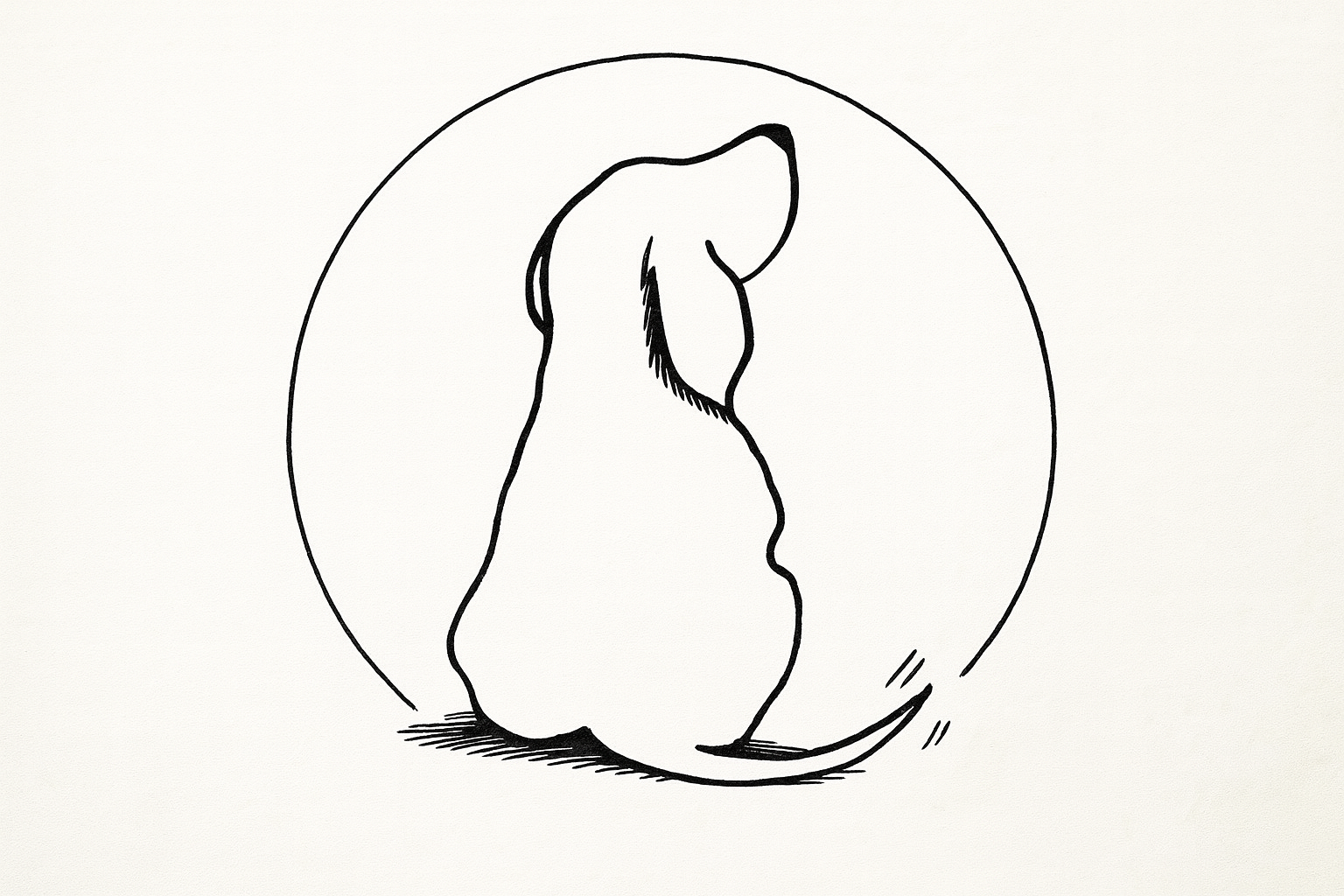
I had a dog.
A black shaggy thing, with a thick, unruly coat that covered his eyes. He was a big dog. When I took him out on walks, his tongue hung from one side of his mouth and his long ears dangled as he pulled me in all directions, sniffing indecisively and panting with excitement. Much like his coat, he was an unruly dog. Despite all the training, he never got used to walking with a lead—walks were always a strength exercise for me. But he was a good boy. Perhaps too excited about the world, never able to stop. He was either asleep or in motion, too confined by my rules and my efforts to slow him down, too big for my home and too strong for my hands, which were full of friction burns after every walk.
I think he may have loved me, maybe not as most dogs love their humans but at least with some sense of care—despite his constant need to run away, despite never wanting to be home. He always wanted to be outside exploring, meeting strangers, wagging his tail for pets and rewards.
There was a side of me in that creature that also values exploration and discovery, and unruly as he was, he pushed me out of my comfort zone on a plethora of occasions. He made me take my earphones off and talk to strangers when he dragged me across the street to bark at them with excitement or anger for god knows what. He taught me to embrace the random and go whichever way he tugged me toward, discovering new roads, parks, and alleys in my neighbourhood. I researched new areas and countryside spots that might excite him—he would push me out into the world, out of the city, out of myself.
But he would eat trash on the streets, get sick and vomit violently, terrify me into emergency vet visits. And always, there were the burns on my palms, raw in the mornings after our long, adventurous walks, stinging as I held my mug of hot coffee or a knife slicing bread. And still, I loved my dog very much.
It was a sunny morning. I had woken up with a brain-shattering hangover; I moved slowly, splashed warm water on my face, my eyes like holes, my mouth dry, my skin dull. I did all the right things: drank lukewarm water with lemon to help my insides recalibrate, showered, moisturised, took vitamins, paracetamol, electrolytes, boiled two eggs, toasted bread—and felt the sting on my palms again—and poured a cup of coffee. All the while Dog circled, barking and whining for his morning walk, worsening my headache, an unwelcome offset to the painkillers I had just swallowed.
Two sips of coffee. That was all I was allowed before he began biting my legs to make me move. As I reached for his lead, I caught sight of the empty cans, the bottles, the countless cigarette butts from the night before, and another sting pierced my stomach: shame. But conveniently, Dog was impatient, so I hurriedly collected the night's leftovers, threw them into a bag and took them out with me. Already, I felt lighter.
The sun and morning breeze helped. Or perhaps it was the mix of medication, nourishment and water finally doing its work. For a few minutes, I enjoyed the walk, breathed deeply, watched the tree branches sway gently. As life returned to my body, the shame drifted.
Before long, Dog tugged again. It felt like it took him longer than usual, as if he sensed I needed that moment before returning to our usual push and pull. Then chaos again: he dragged me into the street, tried to eat some random food packaging, barked three children away, irritated and confused by their excitement as they approached "the big moppy black dog." Finally, he made his way into a narrow street lined with trees.
I don't recall exactly how it happened. I only remember thinking, absurdly, that I couldn't keep repeating this same predictable pattern. I was tired of being dragged through mornings that felt like penance for nights that felt like freedom. The effect was transient. Never enough.
Dog paused for a second and looked back at me, his eyes barely visible under all that hair. He tilted his head lightly like when he was a puppy. "Cute," I thought. Then the light shifted and the moment broke. He pulled again, harder, as though trying to outrun the street itself, and I found myself stumbling after him, the lead carving freshly into the same raw spots on my palms. The sun was in my eyes. And I felt a different kind of pull—one that lifted my arm—and before I knew what was happening, my dog disappeared above my head. He vanished into thin air, dispersed among the trees like a bloodless explosion or black hairy confetti. Only the lead fell back down beside my feet as I stared upward in utter disbelief.
I spent the next few days trying to understand. I printed Missing Dog posters, refusing to accept he was gone. I walked the street where it happened. I whistled, hoping he might appear as suddenly as he had disappeared. I cried at the thought of stumbling upon some gory, torn version of him.
Morning and evening, I went out again and again, gripping the lead as a way of declaring the absence or seeking a presence. I searched tiny alleys and dark corners, peeked into backyards and hidden passages. It became my little mundane routine. And as the days passed, the burns on my hands healed, the beer cans and cigarette butts in my ashtray dwindled, my walks grew steadier.
In the end, it became a ritual. I no longer expected to find him. Instead, the walks became a testament to our conflicting relationship that had expanded and shrunk me in equal measure. The posters around the neighbourhood faded, peeled, disintegrated, while I kept walking.
I am unsure exactly when I stopped bringing the lead. Hands in my pockets, I began noticing clouds, starry skies, shifting light. The trees turning and un-turning with the seasons, as sunlight filtered through the branches, scattering shadows on the pavement and the buildings around. I noticed people: children screaming in playgrounds, couples arguing over shopping lists, strangers crossing streets with their eyes on glowing screens. Somehow, Dog had become all these things that I had been missing while trying to discipline him all these years—and perhaps he was finally free too, no longer bound to the tug-of-war between us.
Last night I dreamt of another dog—a black lab, shiny-coated, smiling the way dogs smile, which is not at all human but somehow more honest. He sat beside me as I finished my breakfast, a ball in his mouth, waiting patiently for his walk.
My dog did not have a name. He hurt me, pulled me away from myself, forced me into places I never chose, but left me in awe nonetheless. He made my hands raw and my life bigger. And still, I loved him very much.
